The Generous Yet Stubborn Cultural Hero: Reflections on Hu Shi (Part Three)
Recently, while researching the historical background of the TCM classic *Huangdi Neijing* (Yellow Emperor's Inner Canon), I read Hu Shi's *Zhongguo Zhonggu Sixiangshi Changbian* (A Draft History of Chinese Thought in the Medieval Period). Once I started, I could not stop—I re-read through Hu Shi's intellectual works and biographies in one sitting, once again deeply moved by this broad-minded yet rational pragmatist master.
Hu Shi received no end of criticism in his lifetime! Yet I hold him in sincere admiration. He bore the great responsibility of enlightening the people and advancing national culture, unafraid of hardship, enduring all manner of abuse and criticism. Even when displaced and wandering, he pressed forward with unwavering resolve. Everything he did in his lifetime represented the utmost that an iron-boned cultural figure could achieve.
Some say the twentieth century was Lu Xun's century, and the twenty-first will be Hu Shi's. I believe Hu Shi's thought and spirit will eventually lead China toward an era of freedom, democracy, reason, and tolerance.
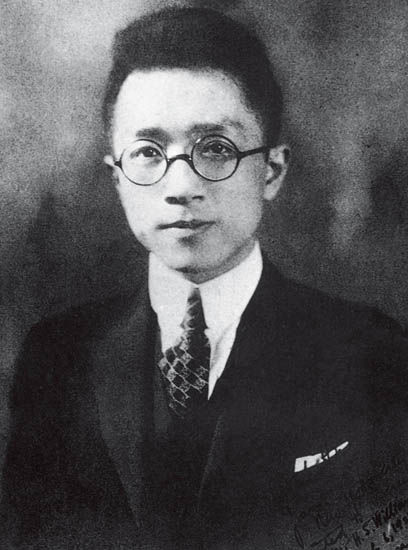
As the standard-bearer of the New Culture Movement during the May Fourth era and a critic of his generation, Hu Shi lived by the spirit of seeking truth from facts. He often said, 'Where there is one piece of evidence, speak one piece; where there is no evidence, remain silent.' This became the guiding principle of his life. The courage and truth-seeking spirit he embodied inspired countless people.
Mr. Hu Shi argued that the cultural dictatorship formed by China's antiquarian tendency was the fundamental reason Chinese society stood still. Though Hu Shi's lifetime of writing was often, due to his many commitments, unfinished—only the upper half without the lower—the essential thing was the spirit of deep self-reflection on national culture that shone through his works.
Hu Shi's essays possessed a grandeur absent from the writing of others. He did not shrink from any kind of criticism. To advance Chinese society, he stirred up countless hornets' nests over his lifetime and offended untold numbers of people. On both sides of the Taiwan Strait, both the Communist Party and the Kuomintang, campaigns to criticize and settle accounts with Hu Shi were at one time or another launched. Alone, in exile in the United States, Hu Shi would only smile faintly upon reading these attacks.
Hu Shi was a generous and magnanimous man, gentle as jade, with the bearing of an ancient gentleman. Even toward those who reviled him, he treated them fairly. Lu Xun had attacked Hu Shi, but when someone launched personal attacks on Lu Xun, Hu Shi in turn defended him—something Lu Xun could not have done. Hu Shi's character was on one side resolute and unyielding, on the other generous and unpretentious.
Both Mao Zedong and Chiang Kai-shek had at one time intended to win Hu Shi over, but Hu Shi remained unmoved and held to his moral principles. He cared for the people and pressed forward fearlessly for the progress of national culture and social institutional reform. He cherished talent and tirelessly promoted younger scholars. Such integrity and open-mindedness are extremely rare in modern cultural circles. Hu Shi's character stands far above those so-called academic masters who shelter themselves in their studies to preserve their own skin.
In *Yueyang Tower Ji*, Fan Zhongyan wrote: 'Were there no such men, with whom would I join?' Hu Shi's ideal is extremely difficult to realize—at least for now, our society has not yet reached the state he envisioned. But the people of noble aspiration who share Hu Shi's vision come in endless succession. It is precisely because of such people that human civilization continues to advance, and that we have been able to free ourselves from the ravages of old ideas, old systems, and old religions, becoming ever more free and happy.
Beneath Hu Shi's refined exterior lay a stubborn spirit. But Hu Shi was no mere man of reckless courage. In a chaotic age, the rational Hu Shi calmly understood that he must protect his capable person, stay alive to continue the fight, rather than, like Wen Yiduo, slamming the table and dying in a pool of blood. The wise men of old were all stubborn, but among those who accomplished great things, stubbornness was never the sole ingredient.
Zeng Guofan wrote the following in a family letter to his younger brother:
'Control yourself forcefully, subdue this mind. Buddhists call this taming the dragon and the tiger. The dragon is ministerial fire; the tiger is liver qi. How many heroes have failed to break through these two gates, and it is not only you and me, brother. The key is to restrain them slightly and not let them blaze out of control. What the ancient sages called restraining desire is taming the dragon; what they called checking anger is taming the tiger. Buddhist and Confucian ways differ, but in moderating qi and blood they are the same: ultimately not letting our cravings harm our bodily life. As for the word stubborn, it is indispensable. Achievements and writing both require these two characters infused through them; without them, soft weakness cannot accomplish anything. What Mencius called utmost firmness, what Confucius called steadfast strength, all emerge from the word stubborn. Our brothers' strength lies precisely in our stubbornness. If we can remove anger and desire to nourish the body, and preserve stubbornness to motivate our will, then we shall advance without bound.'
The Chinese people, from ancient times to the present, have not only been weak-willed but accustomed to each person sweeping the snow before their own door, regardless of the frost on their neighbor's roof—accustomed to being what Lu Xun called onlookers. So it is very hard for us to unite and jointly push society forward. It is always the noble-minded of every dynasty—like Zeng Guofan, who emphasized being both stubborn and restrained of desire and anger, combining firmness and flexibility, persevering unyieldingly through an obstacle-ridden society, holding to their idealism—who can slowly push this ancient great country forward, bit by bit.
Hu Shi achieved this. He was resolute yet gentle, successfully sowing the seeds of thought (the so-called thought poison used to criticize him during the Cultural Revolution) in the Chinese mind. Only, the New Culture Movement Hu Shi launched remains unfinished to this day. The cultural dictatorship of antiquarianism Hu Shi criticized remains deeply rooted. The harmful side of traditional culture is making a comeback. The bystander spirit and Ah-Q spirit rooted in Chinese traditional culture are again running rampant in China, and public morality has seriously declined.
The responsibility of resisting this cultural regression falls on us successors. We should inherit Hu Shi's stubbornness and work tirelessly toward the early completion of social and cultural reform in China, giving our all until death.