Why Do "Good People" Seem More Prone to Cancer?
People often ask me why good people seem more prone to cancer. After my mother died of cancer, someone said to me, "It's true—good people don't live long, while villains live forever." This was no mere comfort; my mother really was a good person. She spent her whole life helping others, supporting the poor and orphans, in ways most people could not. She was nothing like today's philanthropists who perform for show; she did everything simply out of compassion, with no applause and no financial reward.
Many fellow cancer patients are deeply caring people, often driven by sympathy to give what ordinary people would not. I have on several occasions raised donations for patients already in despair; the most generous donors were always the cancer patients themselves—not the Buddhists who talk constantly about being good and doing good, nor the privileged, healthy, educated intellectuals.
In fact, the proportion of "good people" who get cancer is indeed not low. Of course, I lack statistical data and cannot analyze whether "good people" or "bad people" get cancer more; moreover, the standards for "good" and "bad" are far too hard to unify.
One of the most important reasons for this phenomenon is that "good people" suffer far greater psychological stress than "bad people." "Bad people" are spared much worry, and "bad people" also have a higher emotional quotient than "good people."
A person's emotional quotient genuinely affects their probability of developing cancer. Our world is imperfect; the idea that "good is rewarded with good and evil with evil" is only a beautiful wish. In reality, more often good is repaid with evil, while evil dies a peaceful death. Because doing good demands much of a person, yet what one often meets is not gratitude but ingratitude. If a person has strong sympathy and loves doing good, yet wishes to avoid illness, they must learn to control their emotions and not let the dark side of this world affect them.
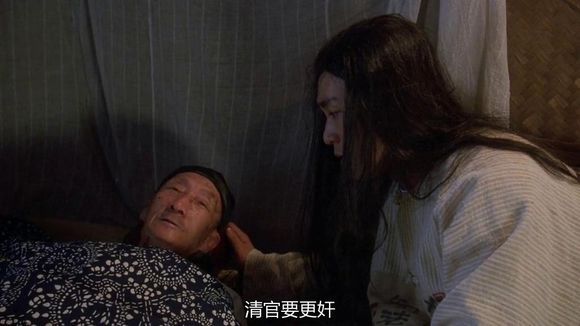
There is a classic line in Stephen Chow's Hail the Judge: "The corrupt official is cunning; the upright official must be even more cunning." "Bad people" have high EQ; "good people" must have an even higher EQ.
Several common cancers—lung, gastric, breast, liver, and lymphoma—are closely tied to the mental stress a person bears and to their personal emotions. A person living year after year in tension and depression easily develops cancer.
I do not advocate abandoning good for evil; in moral choice I still prefer doing good and rejecting evil. But if a person is to consistently do good, they must be psychologically prepared that those they help may not only fail to be grateful but may even harm them. If one expects good to be rewarded with good, one will inevitably lose psychological balance in the end.
As early as the Jin and Song dynasties, more than a thousand years ago, the Chinese Buddhist master Daosheng proposed the doctrines that "good does not receive reward" and that even the icchantika (the irredeemably evil) can attain Buddhahood. Human nature has both good and evil sides; we must recognize this. Only by clearly recognizing it can we remain calm when those we help repay kindness with enmity; otherwise we cannot escape inner torment.